Dubai from the creek
Skip the towers and head for the creek: a metro ride from the airport, a crossing by wooden abra, and an hour or two in the old quarter and the souks.
- City
- Dubai
- Airport to centre
- About 20-30 minutes by metro or taxi
- Getting in
- Dubai Metro Red Line from DXB
- Bring
- Sun hat, water, modest clothes, small cash
Stopover note Summer heat from about May to September makes walking hard at midday; go early or after dark.
Dubai International Airport is unusually close to the city. The terminals sit on the eastern edge of the old town, and the creek, where Dubai began as a fishing and trading settlement, is only a short ride away. That makes it one of the few major hubs where a four or five-hour layover can actually include a look at the city.
Leaving the airport
Many nationalities get a visa on arrival or can enter visa-free, and others can apply for a transit visa in advance, sometimes through their airline. The rules depend on your passport. Immigration at the airport is usually efficient, but queues can be long at peak hours.
The Dubai Metro Red Line has stations at Terminals 1 and 3. From there, you can ride towards the old city and change to the Green Line at Union or BurJuman for the creek. Buy a rechargeable fare card from the machines or ticket office. Food and drink are not allowed on the metro, and there are separate carriages for women and children and a premium class carriage; check the signs on the platform.
Taxis from the rank outside arrivals take about twenty minutes to the creek in normal traffic. Aim to be back at the airport two to three hours before your flight; Terminal 3 in particular is huge, and the walk to the gate can take a while.
Crossing the creek by abra
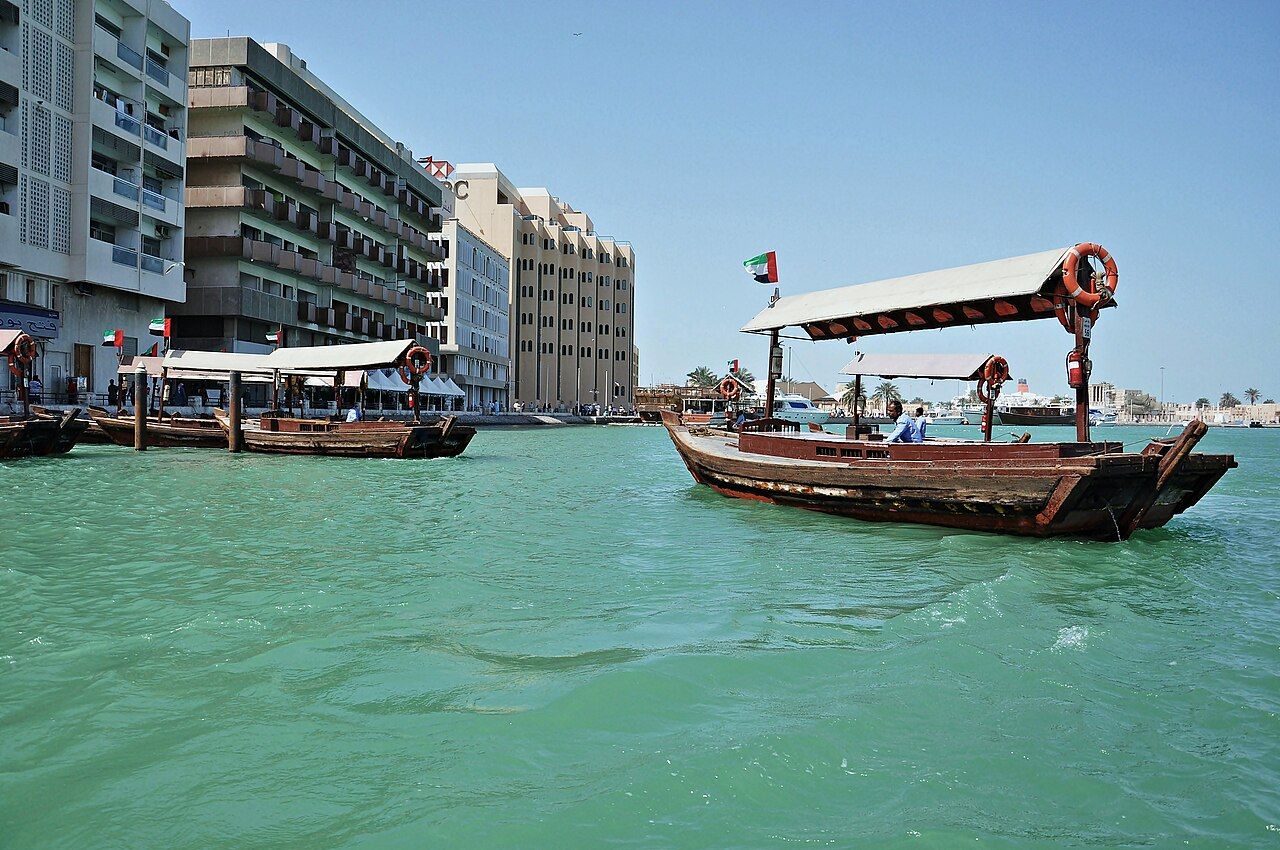
Dubai Creek divides the old city into two halves: Deira on the north-east bank and Bur Dubai on the south-west. The cheapest and most enjoyable way to get across is by abra, the small wooden water taxis that have been ferrying people across for generations.
Abras leave from stations on both banks as soon as they fill up, and the crossing takes only a few minutes. The fare is a coin or two, paid to the driver, so carry small change. You sit on a wooden bench in the middle of the boat, low above the water, with dhows unloading cargo on the quays around you. It is the best few minutes you can spend in Dubai on a short stop.
The souks of Deira
On the Deira side, the abra stations lead straight into the old souks. The Spice Souk is a few narrow lanes lined with sacks of dried limes, frankincense, saffron and dried flowers. A few minutes' walk away, the Gold Souk is a covered arcade of jewellery shops with windows full of gold. Even if you are not buying, it is worth a look.
Bargaining is normal in both souks. Expect to be called into shops; a polite no and walking on is all it takes.
The lanes between the two souks are full of small wholesale shops selling household goods, perfume and textiles, and it is easy to lose track of time. Keep an eye on the clock and on the way back to the abra station or the metro.
Connecting city: Mumbai's south side in a day
Al Fahidi, the old quarter
Back on the Bur Dubai side, the Al Fahidi Historical Neighbourhood is a restored quarter of narrow lanes and sand-coloured houses built in the late nineteenth and early twentieth centuries by merchants who came from across the Gulf. The houses are topped with barjeel, wind towers that catch the breeze and channel it down into the rooms below, a form of air conditioning that predates electricity.
Many of the houses are now small museums, galleries and cultural centres, and the lanes are cool, shaded and quiet in the morning. Give yourself an hour to wander. Nearby, Al Fahidi Fort, the oldest building in the city, once housed the Dubai Museum; check whether it is open, as it has been closed for long periods.
Along the creek, the textile souk stretches between Al Fahidi and the abra station, and further north, towards the mouth of the creek, the Al Shindagha area has restored houses and a museum on the history of the city and its people.
The creek at night
After dark, the creek is at its best. The temperature drops, the waterfront fills with people, and the lights of the buildings on both banks reflect in the water. Wooden dhows are lit up along the quays.
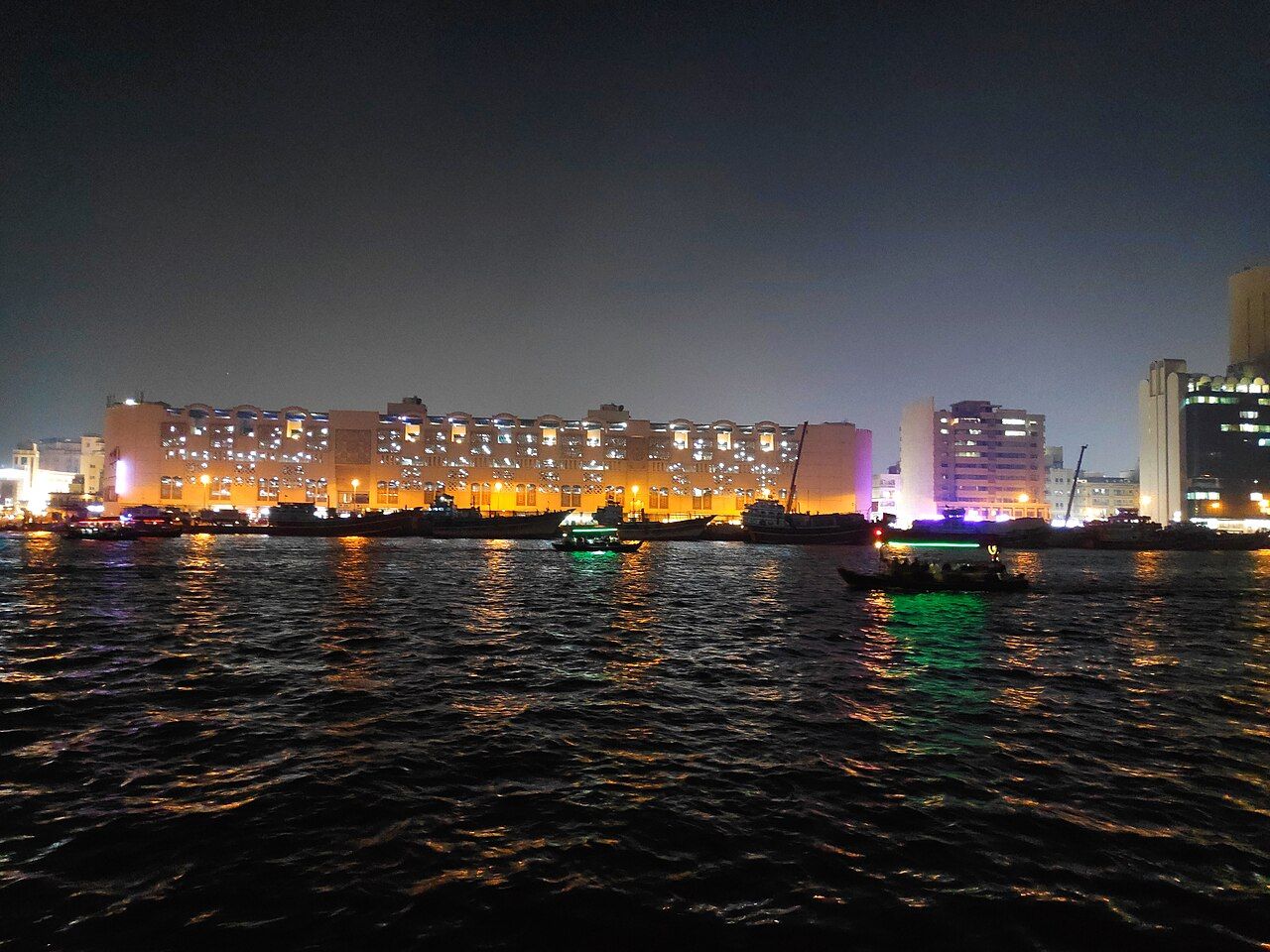

If your flight leaves late at night, an evening at the creek is the best plan: arrive in the late afternoon, walk Al Fahidi, cross by abra at sunset and spend an hour in the souks before heading back. The metro and taxis run late, but check the last train time.
Heat and what to skip
From about May to September, daytime temperatures are extreme, and walking around at midday is unpleasant and potentially dangerous. Plan your visit for early morning or after sunset, drink plenty of water and wear a hat. November to March is far more comfortable.
Dress modestly in the old city and the souks: cover your shoulders and knees. During Ramadan, eating, drinking and smoking in public during daylight hours are restricted, and opening times change.
On a short stopover, skip the desert. A trip to the dunes takes at least half a day. The Burj Khalifa and the modern areas around it are a separate trip from the creek; trying to see both in a few hours means spending most of your time in transit. If you are flying on to Asia, compare this with Mumbai's south side in a day, where the old port also tells the story of the city, or Singapore without leaving the stopover, where the airport itself is a destination.
Next stop: Mumbai's south side in a day