Bangkok by river and rail
Suvarnabhumi is far from the old city, but a train and a river boat can get you to the Grand Palace, Wat Pho and Wat Arun in a long layover.
- City
- Bangkok
- Airport to centre
- About 30-60 minutes by rail or road
- Getting in
- Airport Rail Link, then BTS or river boat
- Bring
- Long trousers or skirt, covered shoulders, water
Stopover note Allow for heat and dress codes: temples want covered shoulders and knees, and the afternoon traffic back to Suvarnabhumi can take far longer than the morning ride in.
Bangkok is one of the easiest big Asian cities to tackle on a stopover, as long as you accept that you will see one corner of it. The temples and palace on Rattanakosin Island, the old royal heart of the city on the east bank of the Chao Phraya, are close together and walkable. The work is getting there and back without losing half your layover to traffic.
Which airport, and how to get in
Most long-haul flights use Suvarnabhumi Airport, east of the city. From the basement of the terminal, the Airport Rail Link runs to Phaya Thai in central Bangkok in roughly half an hour, stopping at stations along the way. At Phaya Thai you can change to the BTS Skytrain. Taxis from the official rank on the arrivals level are metered, but the expressway tolls are extra and the journey time depends entirely on traffic.
Many regional flights use Don Mueang Airport in the north. The SRT Red Line runs from there to Krung Thep Aphiwat Central Terminal, from where you can continue on the MRT. If you are connecting between the two airports, leave a generous gap: the road between them can take well over an hour.
Entry rules for Thailand vary a lot by nationality, and the length of visa-free stays has changed more than once. Check before you fly. As a rough guide, you want at least seven or eight hours between flights before you leave Suvarnabhumi, and you should aim to be back at the airport two to three hours before departure.
The fastest route to the old city
The route that most reliably beats the traffic combines rail and river. Take the Airport Rail Link to Phaya Thai, change to the BTS Skytrain and ride the Silom line to Saphan Taksin station. Below it is Sathorn pier, the main hub for the Chao Phraya Express boats. Boats with different coloured flags run upstream, and most stop at Tha Chang for the Grand Palace and Tha Tien for Wat Pho.
The trip upriver takes around twenty to thirty minutes and is a sight in itself: long-tail boats, barges, temple roofs and riverside houses on stilts. Boat routes and stops change from time to time, so read the signs at the pier and check which boat stops where.

Alternatively, the MRT Blue Line now has a station at Sanam Chai, a short walk from Wat Pho. It is a good fallback in heavy rain, and the station itself is decorated in the style of the old palace.
The Grand Palace and Wat Phra Kaew
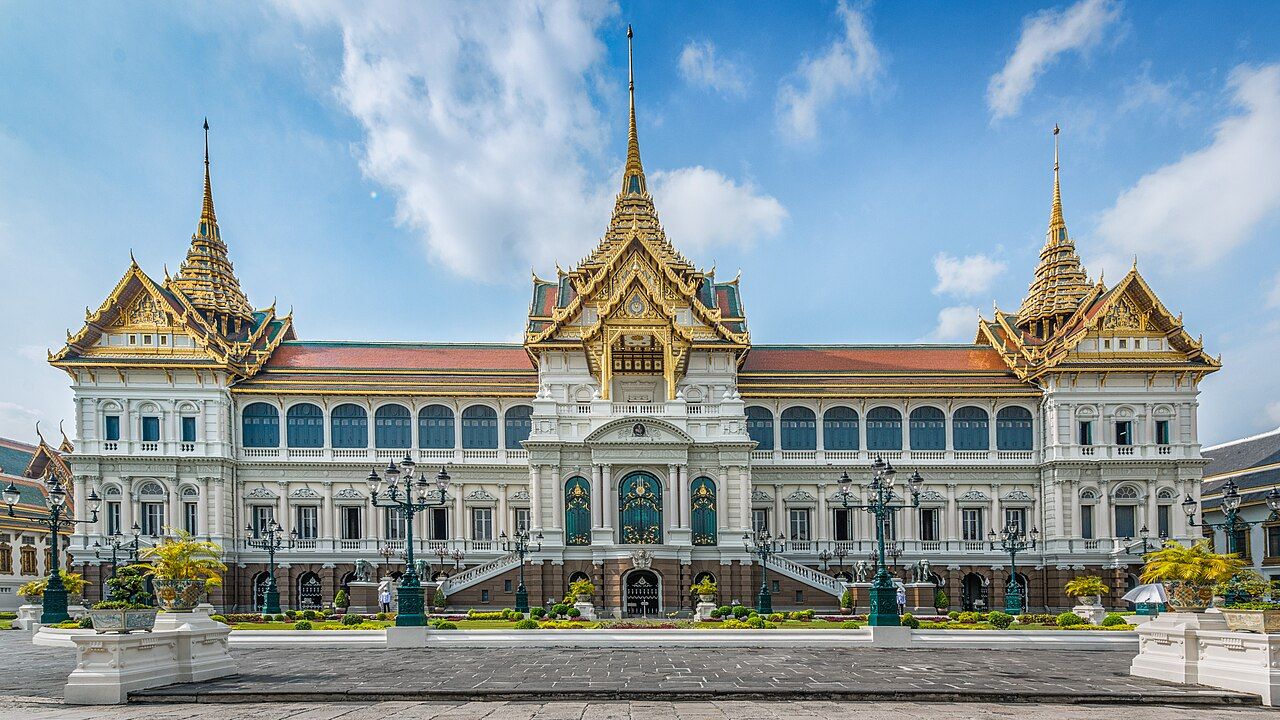
The Grand Palace complex is the city's main landmark and the most crowded. Inside the walls is Wat Phra Kaew, the Temple of the Emerald Buddha, the most sacred temple in Thailand, along with throne halls and courtyards built from the late eighteenth century onwards. The palace grounds open in the morning and close in the afternoon, and parts can shut without much notice for royal or state events.
The dress code is enforced at the gate. Shoulders must be covered, and legs should be covered to the ankle; shorts, short skirts and sleeveless tops will be turned away. Sandals are generally fine, but you will take your shoes off to enter the chapel of the Emerald Buddha, where photography is not allowed.
Give the palace at least ninety minutes. Arrive near opening time if you can, before the tour groups and the worst of the heat. Be wary of anyone outside the walls telling you the palace is closed today and offering to take you elsewhere instead; walk on to the official entrance and see for yourself.
Wat Pho and the reclining Buddha
A ten-minute walk south of the palace, Wat Pho is in many ways the better visit for a short stop. It is larger, calmer and less crowded, and it holds the great reclining Buddha, about 46 metres long and covered in gold leaf, with mother-of-pearl inlay on the soles of the feet. The rest of the temple is a maze of courtyards, chedis covered in coloured tiles, and galleries lined with seated Buddha images.
Wat Pho is also known as the home of traditional Thai massage, and there is a long-running massage school within the grounds. Half an hour of massage after a long-haul flight is not a bad use of time.
Connecting city: Hanoi, and is Ha Long possible?
If you only have time for one temple, choose Wat Pho. You see more for less effort, and it is easier to fit around a tight schedule.
Across the river to Wat Arun
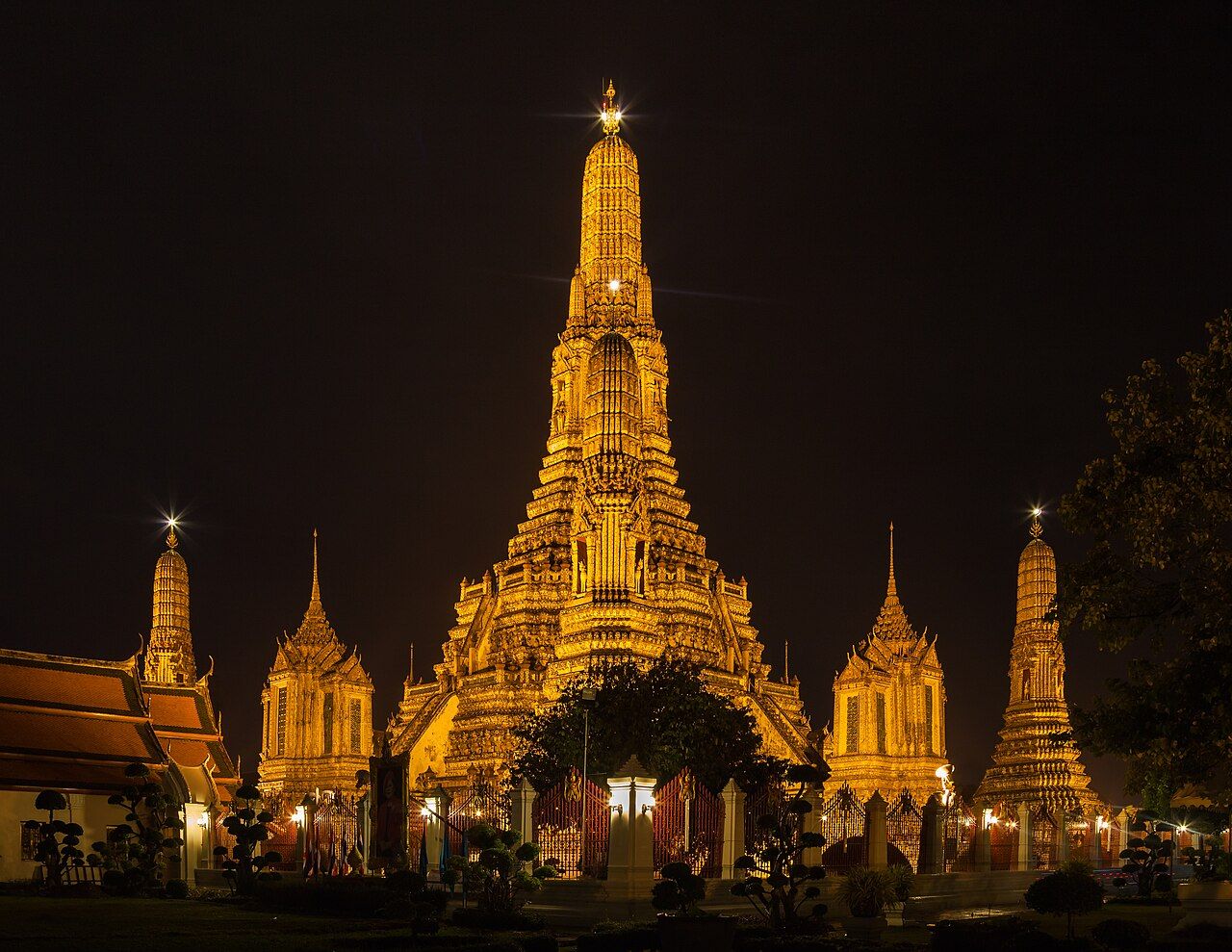
From Tha Tien pier, beside Wat Pho, a small cross-river ferry runs every few minutes to Wat Arun, the Temple of Dawn, on the west bank. The crossing takes about five minutes. The central prang, a tall tower covered in pieces of porcelain and coloured glass, can be climbed part of the way up steep steps, and the view back across the river to the palace is one of the best in the city.
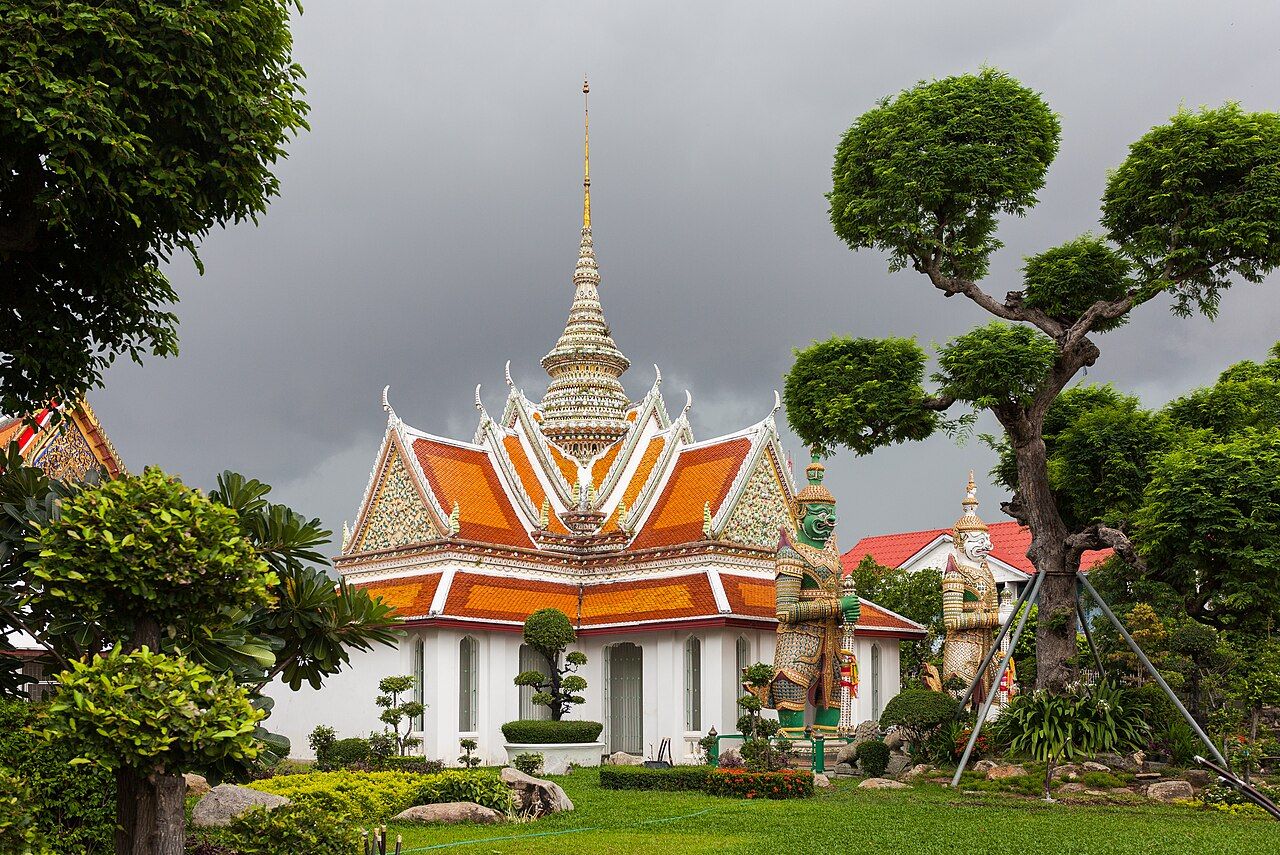

Pairs of giant guardian figures stand at the gates of the temple's main chapel. They are the yaksha, demons from the Ramakien, the Thai version of the Ramayana, set there to guard the temple.
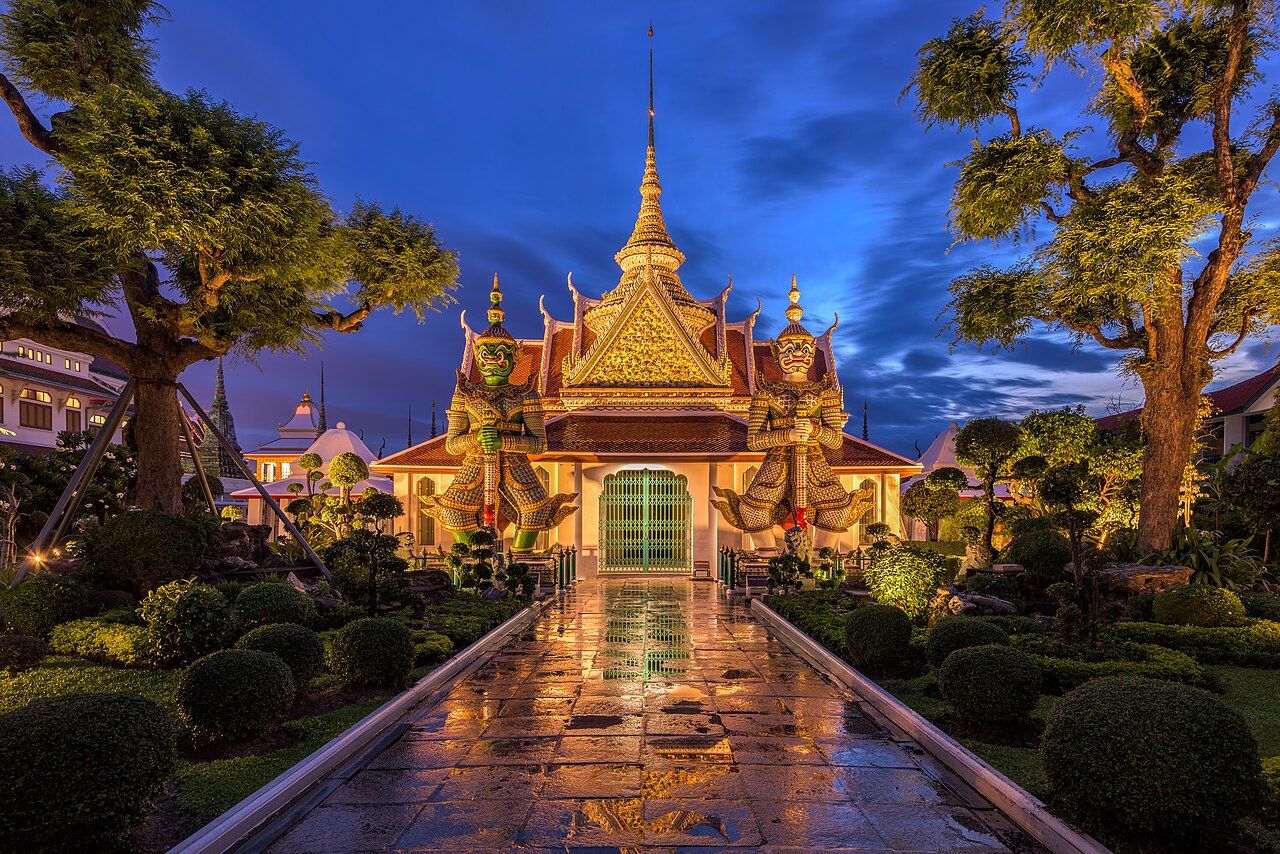

Wat Arun is at its most striking at dusk, when the prang is lit up, and the best place to see that is from the east bank, looking across the water. Many visitors time their day to finish with that view before heading back to the airport.
If you only have time for one temple, choose Wat Pho.
Heat, timing and what to skip
Bangkok is hot all year, and from March to May it is very hot. The rainy season runs roughly from May to October, with heavy afternoon storms that can flood streets for an hour and stop boats running. The cool, dry months from November to February are the most comfortable time for a layover.
Plan your day as a morning or an afternoon on Rattanakosin Island, not both ends of the city. A realistic seven-hour layover looks like this:
- Train and Skytrain to Saphan Taksin, then boat upriver: about an hour and a half after landing, allowing for immigration.
- Wat Pho and the cross-river ferry to Wat Arun: two hours.
- Back by boat and rail, or a taxi straight to the airport if it is not rush hour: an hour and a half.
Skip the floating markets, which are all at least an hour away by road, and the weekend market at Chatuchak unless your flight times line up perfectly. Keep the bars and rooftops of Sukhumvit for a longer visit. If this is one leg of a longer trip through the region, compare it with a stop in Singapore without leaving the stopover, where the airport itself is worth the time, or with Kuala Lumpur between towers and caves, where an express train does most of the work.
Next stop: Singapore without leaving the stopover