Kuala Lumpur between towers and caves
KLIA is a long way from the city, but the express train makes a day trip practical: the twin towers, the colonial square and, with time, the Batu Caves.
- City
- Kuala Lumpur
- Airport to centre
- About 30 minutes by express train
- Getting in
- KLIA Ekspres to KL Sentral
- Bring
- Covering for knees and shoulders, umbrella, water
Stopover note KLIA is about 50 km from the centre; build in time for the train, immigration and the return.
Kuala Lumpur International Airport sits far south of the city, near the administrative capital of Putrajaya. That sounds like a problem, but the express train makes it a smooth trip, and once you are at KL Sentral, the central rail hub, the city's main sights are a short ride or walk away. With seven hours or more between flights, a decent look at the city is realistic.
Getting in from KLIA
The KLIA Ekspres runs non-stop from both terminals, KLIA and KLIA2, to KL Sentral in about half an hour. Trains run frequently from early morning until around midnight. The slower KLIA Transit stops at a few stations along the way. By road, a taxi takes about an hour, and much longer in the evening rush.
Many nationalities can enter Malaysia visa-free for a short stay, and most visitors now fill in a digital arrival card before landing. Check before you fly. Allow about an hour and a half to two hours between landing and reaching the city, and aim to be back at the airport two to three hours before departure.
- KLIA and KLIA2 are separate terminals, linked by a short train ride. Make sure you know which one your onward flight leaves from.
- Left-luggage counters are available at the airport if you have to collect your bags.
- Grab a little cash in ringgit for small purchases and the Komuter train.
Merdeka Square and the old centre
Start where the city did. From KL Sentral, the LRT runs a few stops north to Masjid Jamek station, beside the mosque of the same name. Masjid Jamek, built in the early twentieth century, stands on the spot where the Klang and Gombak rivers meet, the muddy confluence that gave Kuala Lumpur its name. Visitors can enter outside prayer times if dressed modestly; robes are usually provided.
A few minutes' walk away is Merdeka Square, the large green lawn where Malaysia's independence was declared in 1957. A tall flagpole stands at one end. Facing it is the Sultan Abdul Samad Building, a Moorish-style colonial building with copper domes and a clock tower, which is lit up at night. The mock-Tudor clubhouse on the other side of the square is a reminder of the colonial era.
Close by, the Kuala Lumpur City Gallery has a scale model of the city and is a good place to get your bearings. South of the square, the old Chinatown around Petaling Street and the Sri Mahamariamman Temple, the city's oldest Hindu temple, make a good short walk.
The twin towers
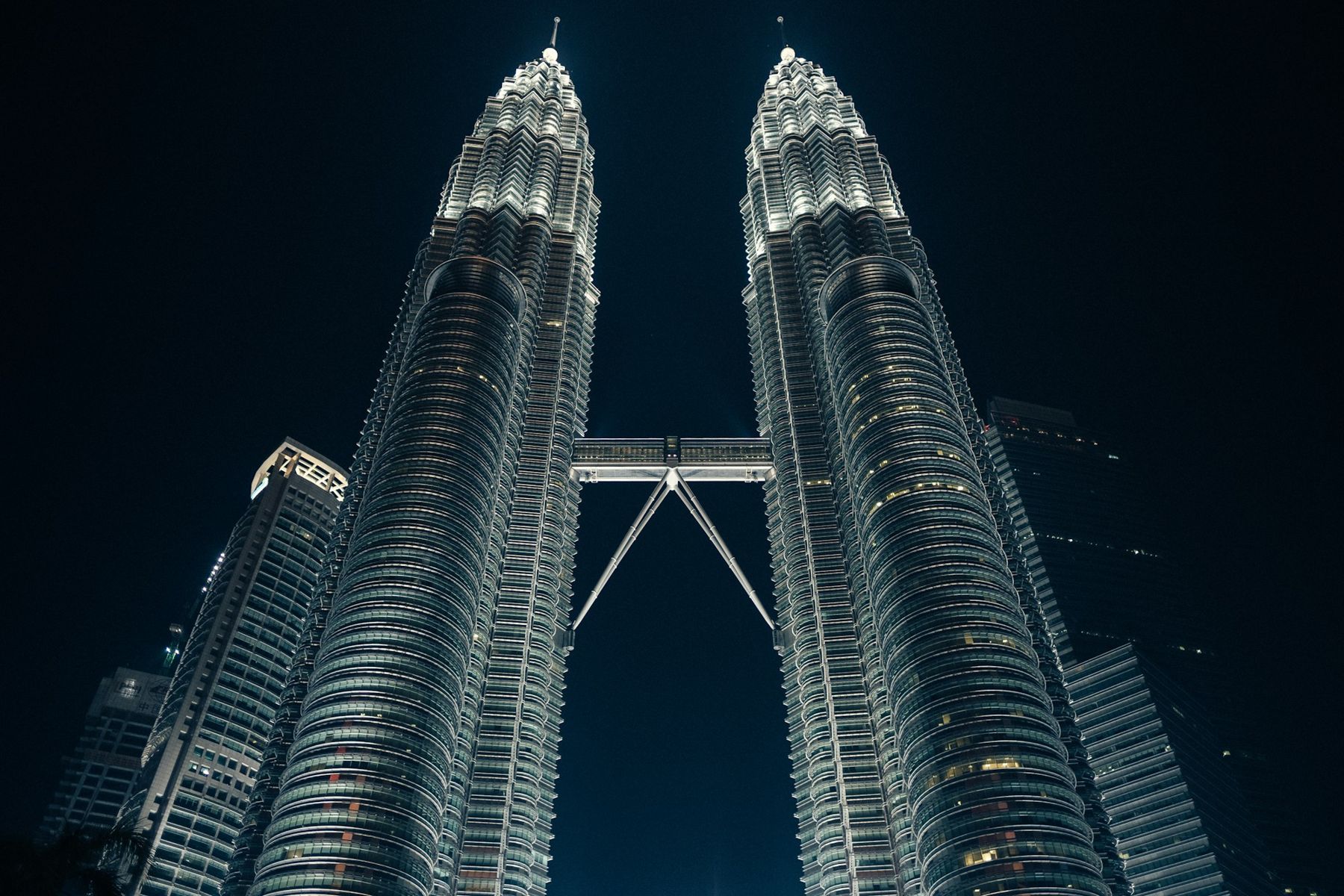
The Petronas Twin Towers, once the tallest buildings in the world, are the city's best-known landmark. Seen from below, the steel-clad towers and the skybridge that links them are striking, especially at dusk. The LRT goes to KLCC station, right at their foot.
Connecting city: Singapore without leaving the stopover
Tickets to the skybridge and observation deck are sold for timed slots, and they can sell out. For most short stopovers, the view from the ground is enough. Behind the towers, KLCC Park has shaded paths, a lake and a fountain show in the evening, and it is a pleasant place to sit for half an hour.
From the park, a covered, air-conditioned walkway leads to the Bukit Bintang area, a useful route in the heat or rain.
Do the Batu Caves fit?
The Batu Caves are a set of limestone caves north of the city, with a Hindu shrine inside the largest one. A giant golden statue of the god Murugan stands at the foot of a long flight of painted steps, 272 of them, leading up to the main cave. It is one of the most photographed places in Malaysia, and the site becomes very busy during the Thaipusam festival early in the year.
The KTM Komuter train runs from KL Sentral to Batu Caves station, right next to the site. The ride takes about half an hour, but trains are not very frequent. Taken together, the caves make a half-day trip: about three hours including travel.
Whether it fits depends on your layover:
- Under seven hours: skip the caves and stick to Merdeka Square and the towers.
- Seven to ten hours: choose either the caves or the city centre, not both.
- Over ten hours: do the caves in the morning, before the heat, then the city in the afternoon.
Cover your knees and shoulders, carry water, and keep food out of sight: the macaques on the steps are bold and will snatch it.
Heat, rain and other practicalities
Kuala Lumpur is hot and humid all year. Rain is common at any time, often as heavy afternoon or evening storms, with the wettest months usually around the change of the monsoons. May to July tends to be a little drier. Plan to be indoors or in the shade in the middle of the day.
The city's rail lines are useful, but stations are not always well connected on foot, and some changes involve long walks. A ride-hailing car is often the quickest way between two sights that are not on the same line, though road traffic is heavy at rush hour.
For the national museum, the Islamic Arts Museum and the National Mosque, head to the area around the Lake Gardens, south-west of Merdeka Square. The Islamic Arts Museum in particular is worth an hour if you prefer a cool, quiet indoor stop.
What to skip
Skip the Genting Highlands and Putrajaya, which are too far for a short stopover, and do not try to cover every neighbourhood. If Kuala Lumpur is one stop on a longer route, compare it with a stopover in Jakarta's old town and harbour, where traffic shapes the whole day, or Dubai from the creek, another hub where the old city tells you more than the new towers.
Next stop: Jakarta's old town and harbour