Manila's walled city
Manila's traffic is the first thing to plan for. Allow for it, and a long layover can take you to the walled city of Intramuros, its old church and the park beside it.
- City
- Manila
- Airport to centre
- Thirty minutes to two hours, traffic dependent
- Getting in
- Taxi or car from the airport
- Bring
- Water, sun hat, modest clothing for church, small change
Stopover note Traffic between the airport and Intramuros is unpredictable, especially at rush hour and in rain. Leave the city four hours before your flight.
Manila is the hardest of the region's hubs to use on a short stopover, and it is worth saying so plainly. The airport is not far from the old city in distance, but the roads between them are some of the most congested anywhere. With a long layover, though, and realistic expectations, the walled city of Intramuros repays the effort: four centuries of colonial and Filipino history in a few dozen blocks.
Traffic decides the plan
Ninoy Aquino International Airport, usually called NAIA, has several terminals that are not connected airside, and transfers between them are by road. From the airport to Intramuros is roughly ten kilometres, which can take half an hour early on a Sunday morning or two hours on a weekday evening in the rain.
There is no rail link from the airport to the old city. Most visitors use taxis from the official ranks, or ride-hailing services, and agree on the fare or confirm the meter before setting off. Airport buses run to some districts but are less useful for Intramuros.
- Under eight hours: stay at the airport. The risk of missing your flight is real.
- Eight to twelve hours: Intramuros only, with a generous margin.
- Overnight: Intramuros, Rizal Park and the National Museum.
Many nationalities can enter the Philippines visa-free for short stays, and there is an online arrival registration to complete before landing.
Intramuros: the walled city
Intramuros, meaning "within the walls", was the Spanish colonial city, founded in the late sixteenth century on the south bank of the Pasig River. Much of it was destroyed in the fighting of 1945, and what you see now is a mixture of surviving buildings, careful restorations and later reconstructions inside the stone walls, most of which still stand.
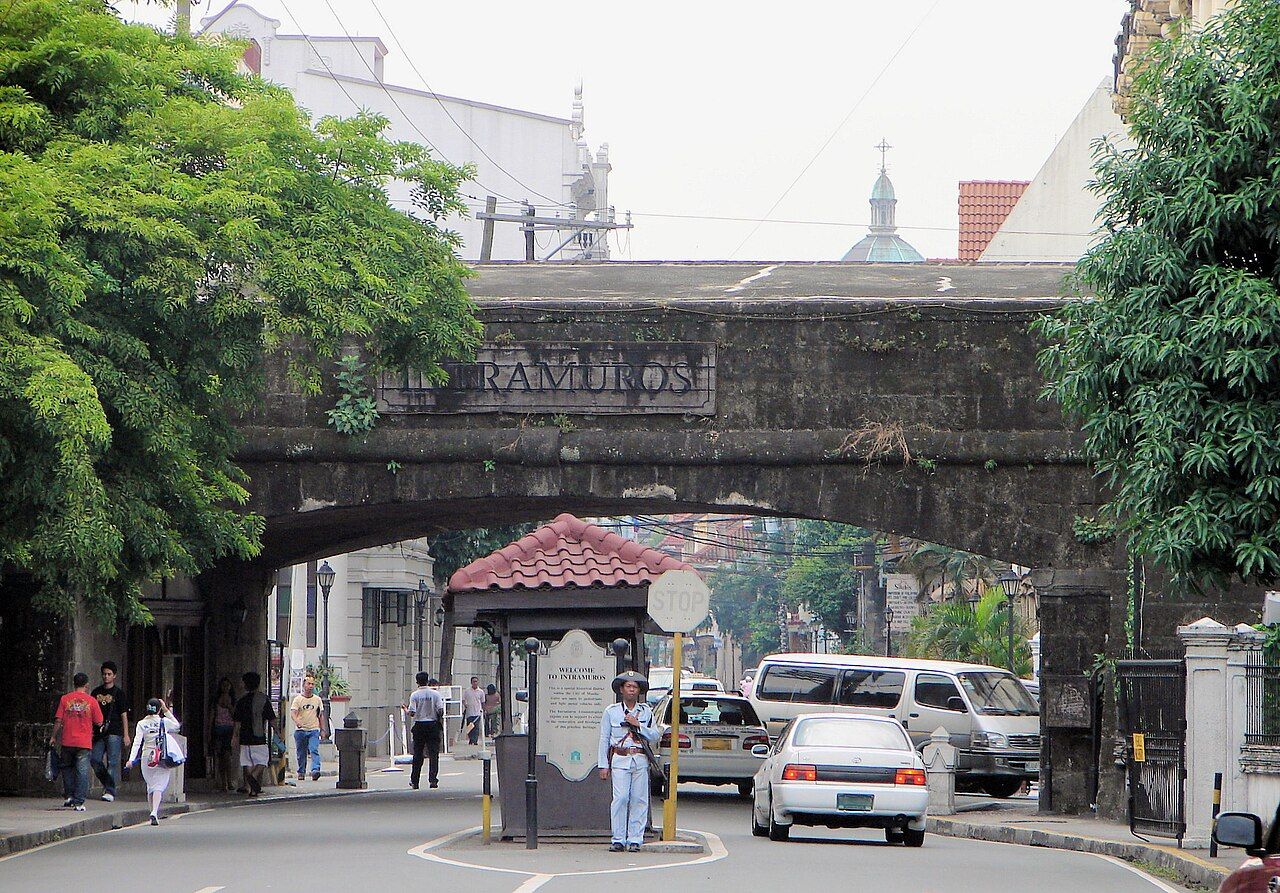

It is a pleasant place to walk, quieter than the city around it, with cobbled streets, restored houses and a long walk along the top of the walls. Horse-drawn carriages and bicycle tours operate inside, but you do not need either: the whole area is about a kilometre across.
Connecting city: Hanoi, and is Ha Long possible?
San Agustin Church
San Agustin Church is the oldest stone church in the Philippines, completed in the early seventeenth century and one of the few buildings in Intramuros to survive the war. It is one of four baroque churches of the Philippines listed together as a World Heritage Site. The exterior is plain; the interior, with its painted trompe-l'oeil ceiling, is not.
It is still an active parish and a popular wedding church, so the main nave may be closed during services. The adjoining monastery houses a museum of religious art and colonial history, with cloisters that are cool and calm on a hot day. Dress modestly, and allow about an hour for church and museum together.
Manila Cathedral, a few blocks north, is a later rebuilding on a site used since the sixteenth century. It is worth a look on the way past.
Between the churches, Casa Manila is a reconstructed townhouse of the colonial period, furnished as a wealthy family home, and gives a clear picture of how the walled city once lived. It sits opposite San Agustin, so it costs you little time.
Fort Santiago
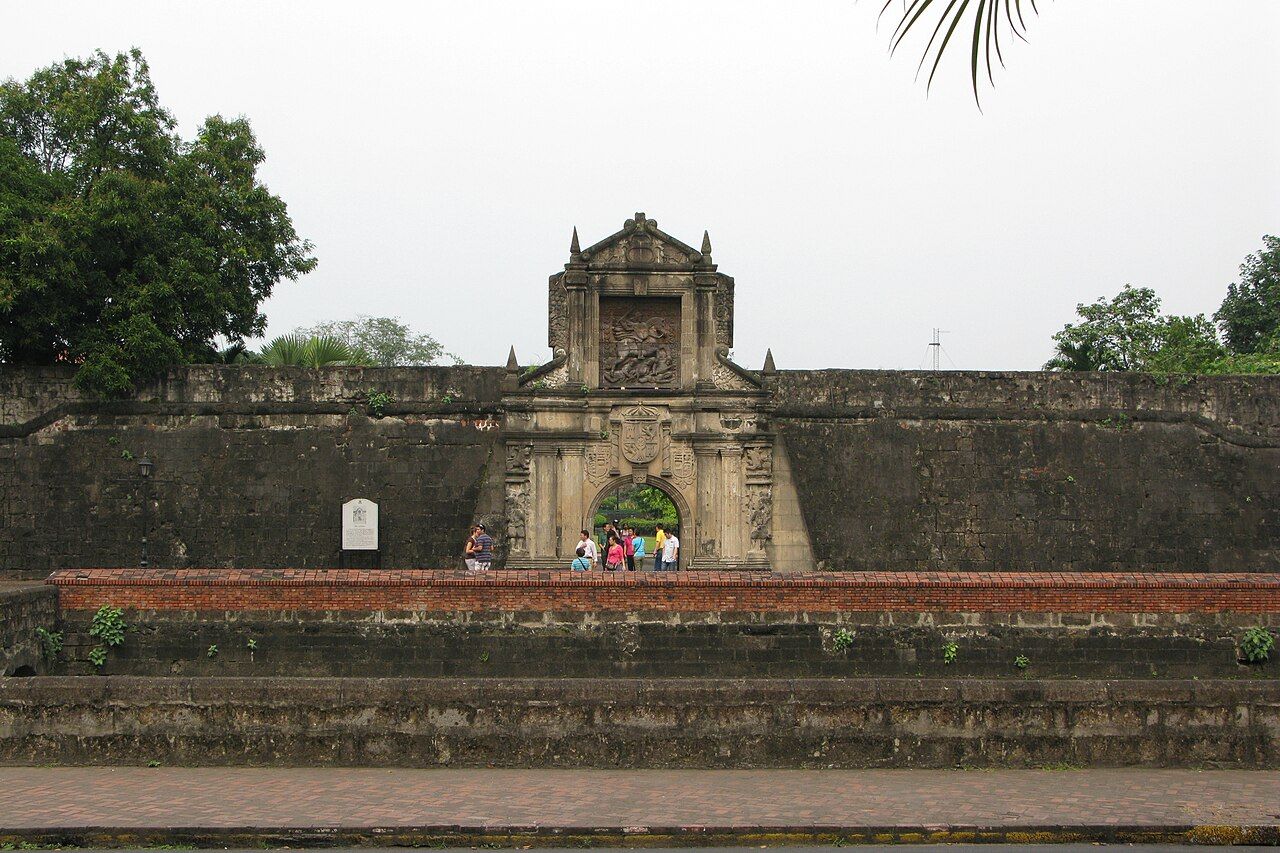
At the northern tip of Intramuros, guarding the mouth of the Pasig, Fort Santiago is the oldest part of the walled city's defences. You enter through a carved stone gate across a moat. Inside are gardens, ruined barracks and the shrine to José Rizal, the national hero, who was held here before his execution in 1896. Brass footprints set into the ground trace his last walk to the place of execution.
The fort charges a modest entry fee and keeps daytime hours. Allow an hour, and go early or late in the day to avoid the strongest sun.
Rizal Park and the museums
Just south-east of Intramuros, Rizal Park, also known as Luneta, is the city's main public park, with the Rizal Monument at its western end facing Manila Bay. It is busy at weekends with families and joggers and makes a good walk between the walled city and the bay.
On the park's edge, the National Museum of the Philippines occupies several grand buildings, covering fine arts, anthropology and natural history. The galleries are excellent and well kept, but realistically, on a layover, you have time for one building at most. Check opening days before you go.
Manila Bay's waterfront, south along Roxas Boulevard, is known for its sunsets but can be slow to reach in traffic, and the heat makes long walks hard work.
Heat, money and getting back
Manila is hot and humid year round, with a wet season roughly from June to October that brings typhoons and flooding. The cooler, drier months from December to February are much easier for walking. Carry water, wear a hat, and plan indoor breaks.
Cash in small notes is useful for entry fees and drinks. Cards are accepted in larger places. Keep valuables out of sight in crowded areas, as you would in any large city.
The return journey is where Manila layovers go wrong. Start back to the airport at least four hours before an international departure, more on a weekday afternoon or in heavy rain, and confirm which terminal you need, because they are far apart. If you have a choice of hubs, Taipei or Singapore are far easier for a short stop. For a longer visit, Manila's old city is well worth it.
Next stop: Hanoi, and is Ha Long possible?