Taipei in a day
Taipei is compact, safe and easy to get around, and the airport line runs straight to the main station. A layover can take in a temple, a memorial hall and a night market.
- City
- Taipei
- Airport to centre
- About 40 minutes by airport MRT
- Getting in
- Airport MRT from Taoyuan
- Bring
- Umbrella, stored-value transit card, light layers
Stopover note Many passports can enter Taiwan visa-free for short stays, but not all. Summer afternoons bring heat and sudden heavy rain.
Taipei is one of the most relaxed cities in Asia for a stopover. It is compact, the metro is clean and clearly signed in English, and most of what is worth seeing on a short visit lies along a few metro lines. The heat and rain in summer are the main things to plan around.
From Taoyuan into the city
Most international flights land at Taoyuan International Airport, about forty kilometres west of the city. The Taoyuan Airport MRT runs from both terminals to Taipei Main Station; the express service takes around forty minutes, and a slower commuter service calls at every stop. At Taipei Main Station you connect to the city metro.
Some regional flights use Songshan Airport, which is inside the city on the metro's brown line. A layover at Songshan is the easiest of all, with the centre a short ride away.
Taiwan offers visa-free entry for short stays to many nationalities, and an online arrival card is required. Rules vary by passport. Taoyuan has left-luggage counters in both terminals.
Longshan Temple
Longshan Temple in the Wanhua district is the oldest and busiest temple in the city, founded in the eighteenth century by settlers from Fujian and rebuilt several times since. It is a working temple, dedicated mainly to Guanyin, with dozens of other deities in the side and rear halls. The roofs are crowded with dragons and figures in coloured ceramic, and the incense smoke rarely clears.
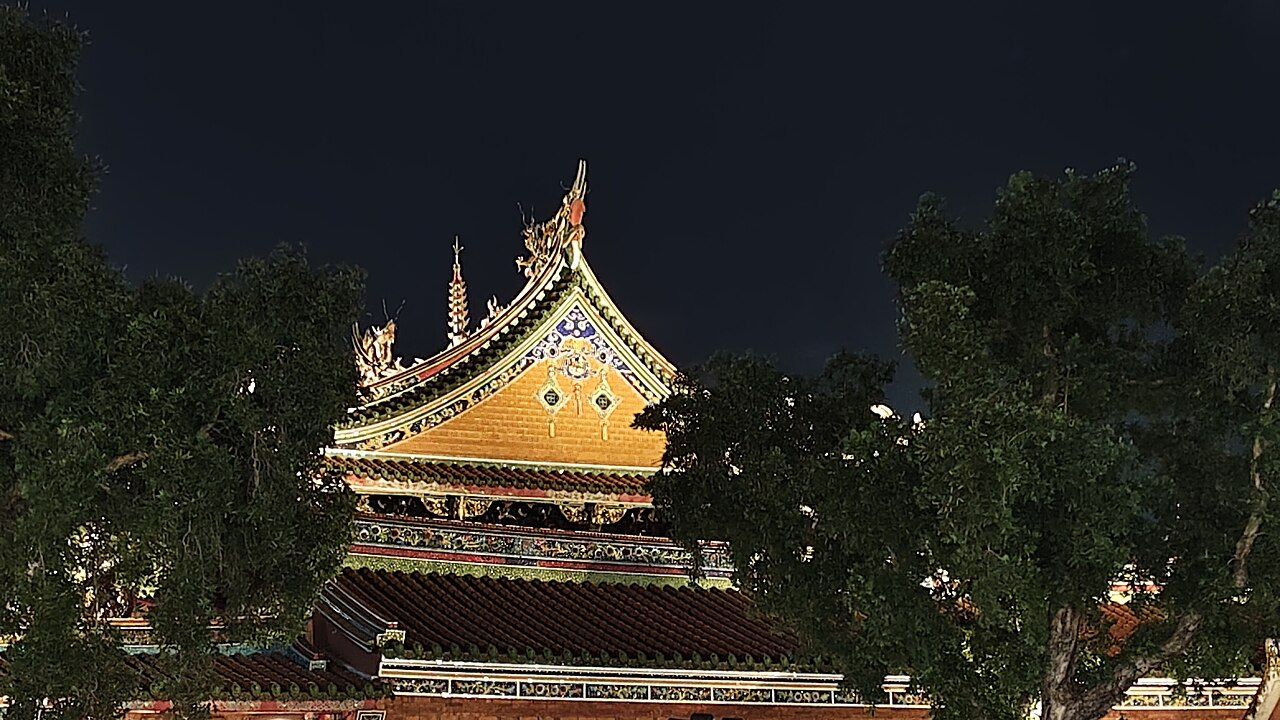

Visitors are welcome. Dress modestly, keep quiet near people praying, and avoid stepping on the raised thresholds. Early morning and evening, when worshippers chant, are the most atmospheric times. The temple is a short walk from Longshan Temple station on the blue line, and the old streets of Wanhua nearby are worth a short loop. Allow about an hour.
Close by, Bopiliao is a restored street of old shophouses with arcaded fronts, and the Bangka area around the temple has small herb shops and old-style food stalls. It is a good place to walk slowly for half an hour and see a side of the city that the glass towers of Xinyi do not show.
Chiang Kai-shek Memorial Hall
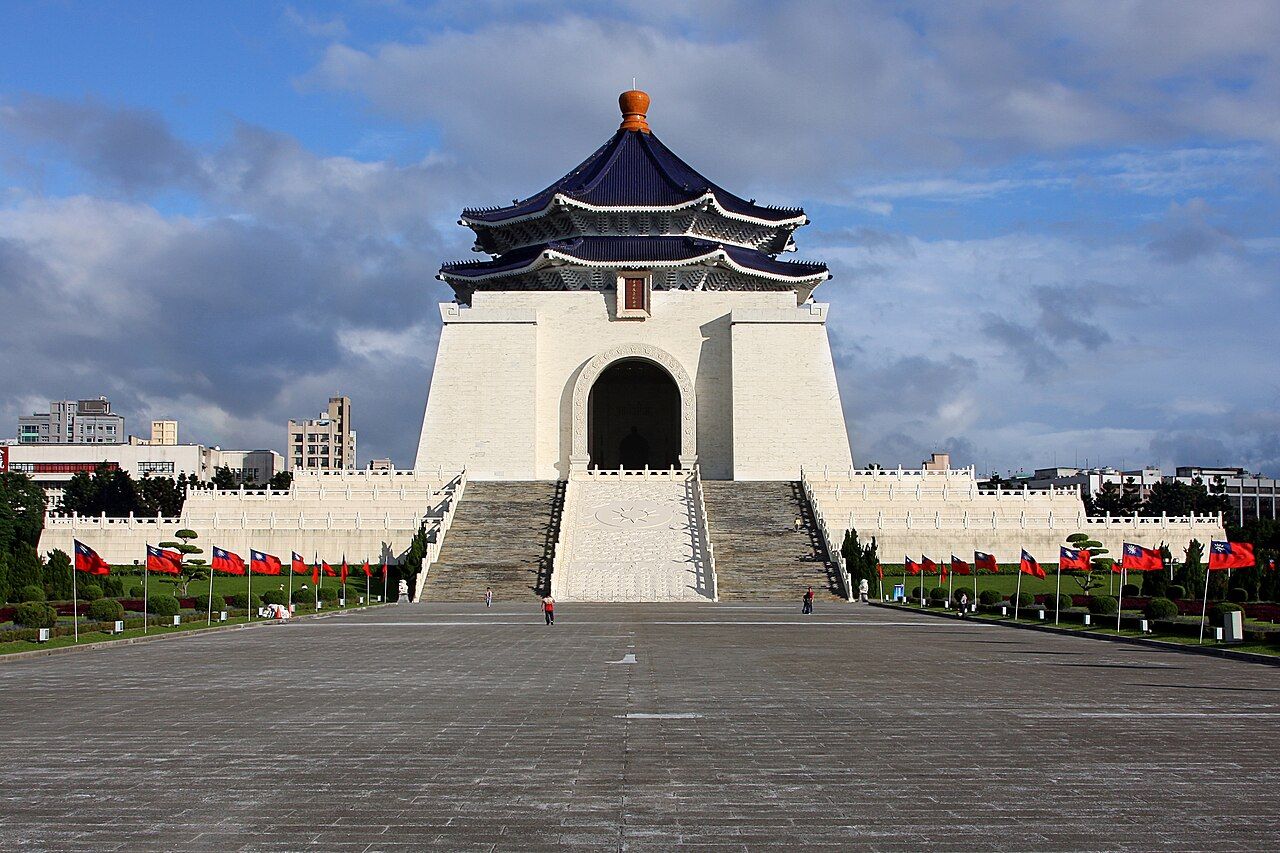
A few stops east, the Chiang Kai-shek Memorial Hall stands at the end of a vast paved plaza, a white building under a blue octagonal roof. Inside is a large seated statue and a museum on Chiang Kai-shek's life. A changing of the guard takes place in the main hall at regular intervals during opening hours.
The square itself, Liberty Square, is framed by the National Theater and National Concert Hall in matching traditional style, and is often used for public events. The memorial hall has its own metro station, and the site takes about an hour. The hall's role and presentation have been the subject of public debate in Taiwan, and parts may be closed or changed.
Connecting city: Hong Kong harbour to peak
Taipei 101 and Elephant Mountain
Taipei 101, in the Xinyi district, was the world's tallest building for several years and still dominates the skyline. Its observatory is popular, but tickets and queues can eat time. A good alternative is the short, steep trail up Elephant Mountain, which starts near Xiangshan station at the end of the red line. Twenty to thirty minutes of stairs bring you to viewpoints looking straight at the tower over the city.
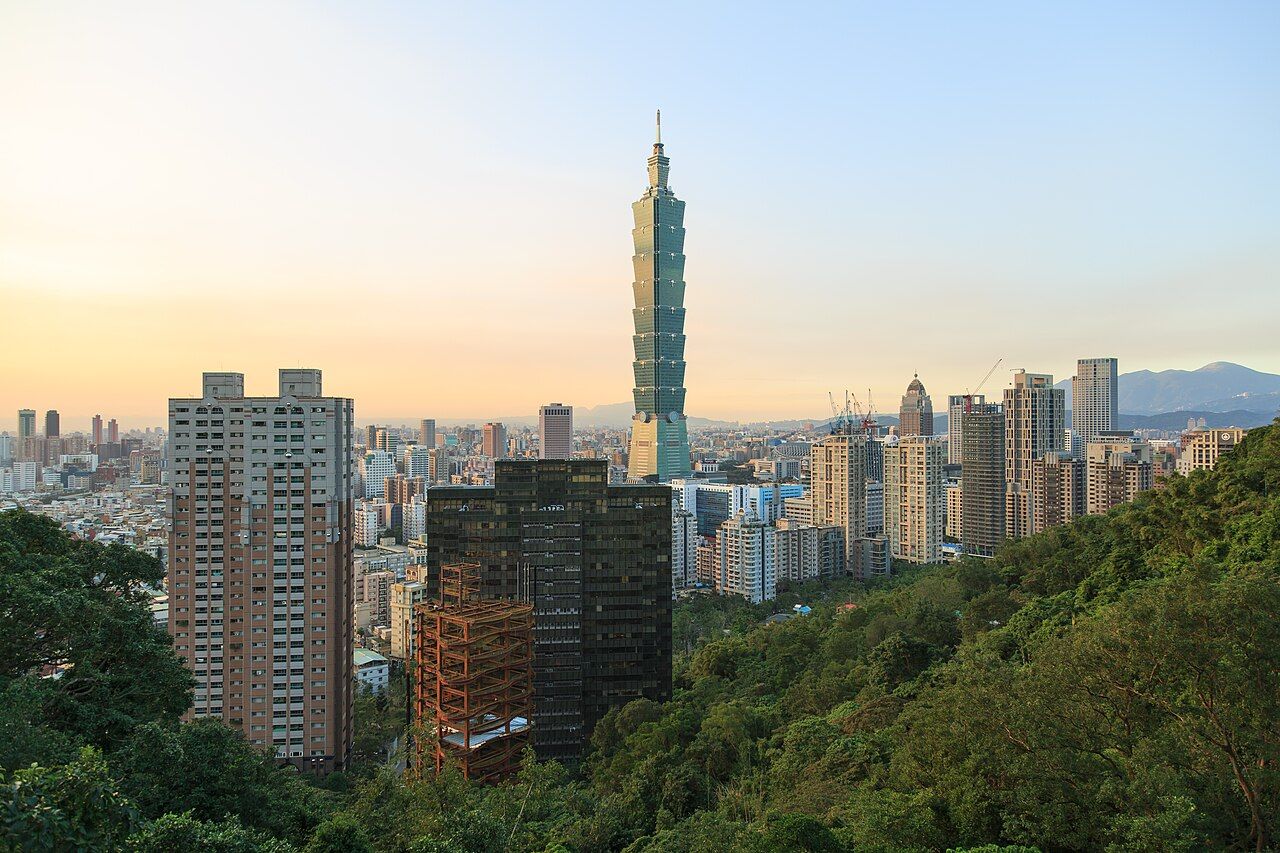

The trail is best in the late afternoon, when you can watch the city lights come on, but bring water and expect humidity. In heavy rain the steps get slippery.
If you prefer to stay on the flat, the plaza at the foot of Taipei 101 and the wide walkways around the Xinyi district give a good look at the tower without the climb, and the Sun Yat-sen Memorial Hall, a short walk north, has a park around it where people practise tai chi and dance in the mornings.
Night markets
Night markets are a big part of Taipei's street life. They start in the late afternoon or evening and run till late, with rows of food stalls, games and small shops along a street or around a temple. Raohe Street, near Songshan station, and Ningxia, near the centre, are compact and easy to reach; Shilin is the largest but sprawls. Bring cash; many stalls do not take cards.
The order is simple: walk the length once, then go back for what looked best. A layover rarely needs more than an hour here.
Putting it together
- Six to eight hours: Longshan Temple and the memorial hall, both on or near the blue and red lines.
- Eight to twelve hours: add Elephant Mountain at dusk and a night market.
- Overnight: add the National Palace Museum in the north of the city, which holds one of the great collections of Chinese art and needs at least half a day.
A stored-value transit card, sold at airport MRT and metro stations, covers trains and buses. Convenience stores everywhere are useful for water and quick snacks.
What to skip, and getting back
Skip Jiufen and the north coast on a layover; they are well over an hour each way by road, and the return can be slow. Skip the hot springs at Beitou unless you have a whole day.
Leave Taipei Main Station with time to spare. Allow forty minutes on the airport MRT, plus the walk to check-in, and be at the airport around three hours before an international flight. If you are heading on through the region, Manila and Tokyo are both short hops, with very different airport journeys.
Next stop: Hong Kong harbour to peak