Seoul between flights
Incheon is far from central Seoul, but the rail link is quick and the old palace district is compact. A long layover can cover a palace, a hanok lane and a market lunch.
- City
- Seoul
- Airport to centre
- About an hour by express train
- Getting in
- Airport rail link to Seoul Station
- Bring
- Transit card, layers, comfortable walking shoes
Stopover note Some passports need a pre-registered travel authorisation even for short visits. Allow three hours at Incheon before departure.
Incheon International Airport sits on an island off the west coast, around fifty kilometres from central Seoul. That sounds like a problem for a stopover, but the airport rail link makes it manageable, and the part of the city most worth seeing on a short visit, the palace district north of the centre, is compact enough to walk.
From Incheon into the city
The airport railroad, usually called AREX, runs from both terminals to Seoul Station. There are two services: an express that runs non-stop and takes a little under an hour, and an all-stop commuter train that is cheaper and slower, calling at Gimpo Airport and Hongik University on the way. Either works. From Seoul Station the subway takes you north towards the palaces in a few stops.
Budget around an hour each way including the walk to the platform and the change at Seoul Station. Taxis and airport buses also run into the city, but road time varies far more with traffic.
Entry rules for Korea depend on nationality. Some travellers enter visa-free, some need a pre-registered electronic travel authorisation, and some need a visa. The airport has also run its own transit programmes for passengers with long connections.
How much time you need
- Under seven hours: probably not worth the trip into Seoul. Incheon is a large, comfortable airport with quiet areas and cultural displays airside.
- Seven to ten hours: Gyeongbokgung and Bukchon, at a steady pace.
- Ten hours or more: add a market lunch and a walk along the Cheonggyecheon stream.
Storage is straightforward. Incheon has left-luggage counters in the arrivals area, and lockers are common at large subway stations, including Seoul Station.
Gyeongbokgung Palace
Gyeongbokgung was the main royal palace of the Joseon dynasty, first built at the end of the fourteenth century and rebuilt in stages since. You enter through Gwanghwamun, the great gate at the top of the wide Gwanghwamun Square, and walk through a series of courtyards to the throne hall, Geunjeongjeon, with the mountains rising behind it.
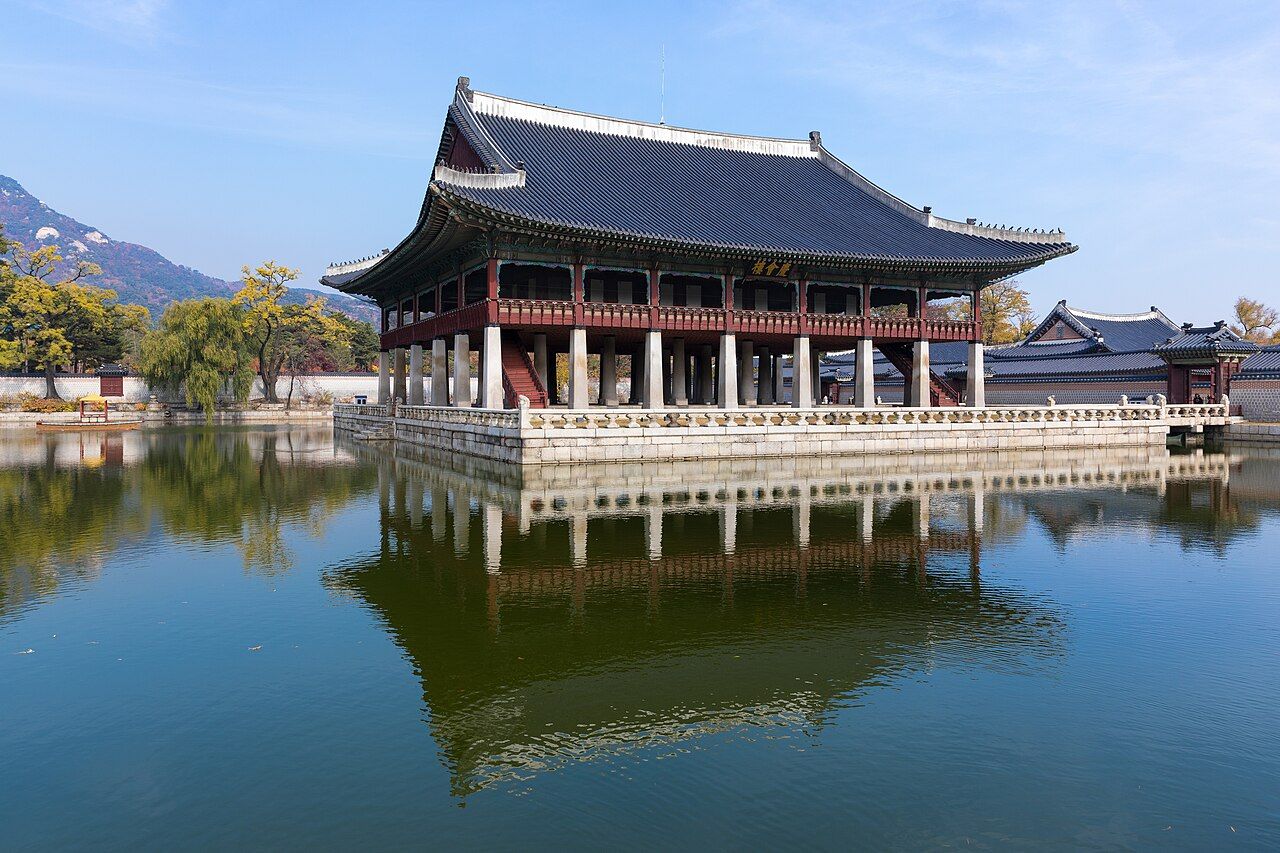
The highlight for many visitors is Gyeonghoeru, the banquet pavilion that stands on stone pillars in a square lake. Further north, the small Hyangwonjeong pavilion sits on an island reached by a bridge. A changing of the guard ceremony takes place at the main gate at set times on most days, and it is worth timing your arrival for it if you can.
Give the palace about two hours. It closes one day a week, and opening hours vary by season. The National Folk Museum of Korea is inside the grounds and makes a good add-on if it is raining.
On the way in or out, Gwanghwamun Square itself is worth a few minutes. The long open plaza in front of the palace gate has statues of King Sejong, who promoted the Korean alphabet, and Admiral Yi Sun-sin, the naval commander, with mountains rising behind the palace roofs.
Connecting city: Tokyo in a stopover
Bukchon's hanok lanes
East of the palace, on the slopes between Gyeongbokgung and Changdeokgung, Bukchon is a residential area of traditional tiled-roof houses called hanok. The lanes climb steeply and the best-known viewpoints look down narrow streets of dark roofs towards the modern city.
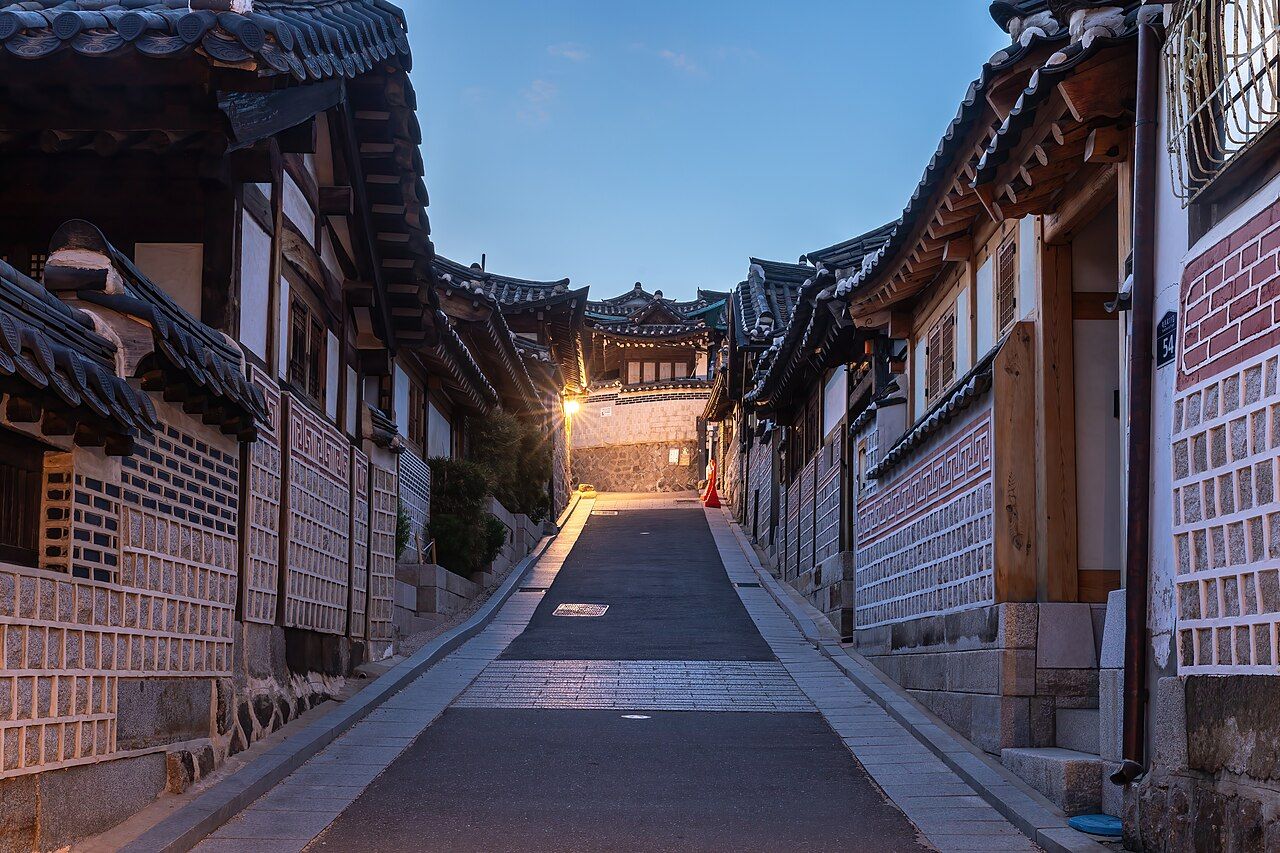

People live here, and that matters. Parts of the area have set visiting hours and restrictions on tour groups because of noise, and residents ask visitors to keep their voices down and stay out of doorways. Walk quietly, take your photos from the street, and move on. An hour is enough to get a feel for it.
If you have time and energy, Changdeokgung, a second palace with a celebrated rear garden, is just beyond Bukchon. The garden is usually seen on a guided entry at set times, which is hard to fit into a layover.
A market lunch
Seoul's traditional markets are the easiest place to eat well in a short time. Gwangjang Market, east of the palaces along the Cheonggyecheon stream, is one of the oldest, with long rows of food stalls under a high roof. Mung bean pancakes, rice rolls and noodles are the standard order, and you sit on a bench at the counter while they are cooked in front of you.
Walking there from Bukchon takes around half an hour, or a few stops by subway. From the market, the stream path makes a pleasant walk west back towards the centre before you head for Seoul Station.
Card payment is widely accepted, and a rechargeable transit card covers subways and buses. Cash is still useful at some market stalls.
What to skip, and getting back
Skip the southern districts across the Han River on a short layover; they deserve a separate visit. Gangnam and the riverside parks are a long way from both the palaces and Seoul Station. Skip the DMZ too: it needs a booked, guided trip of most of a day, and cannot be done independently.
Head back to Seoul Station in good time. Incheon is large, the walk from the train to check-in and security takes a while, and the express train does not run every few minutes. Aim to be at the airport three hours before an international departure.
If your journey continues south, Taipei makes a natural next stop, and Shanghai is a short flight west, though its entry rules need checking separately.
Next stop: Shanghai from the Bund